
What Prolonged Sitting Does To Your Spine
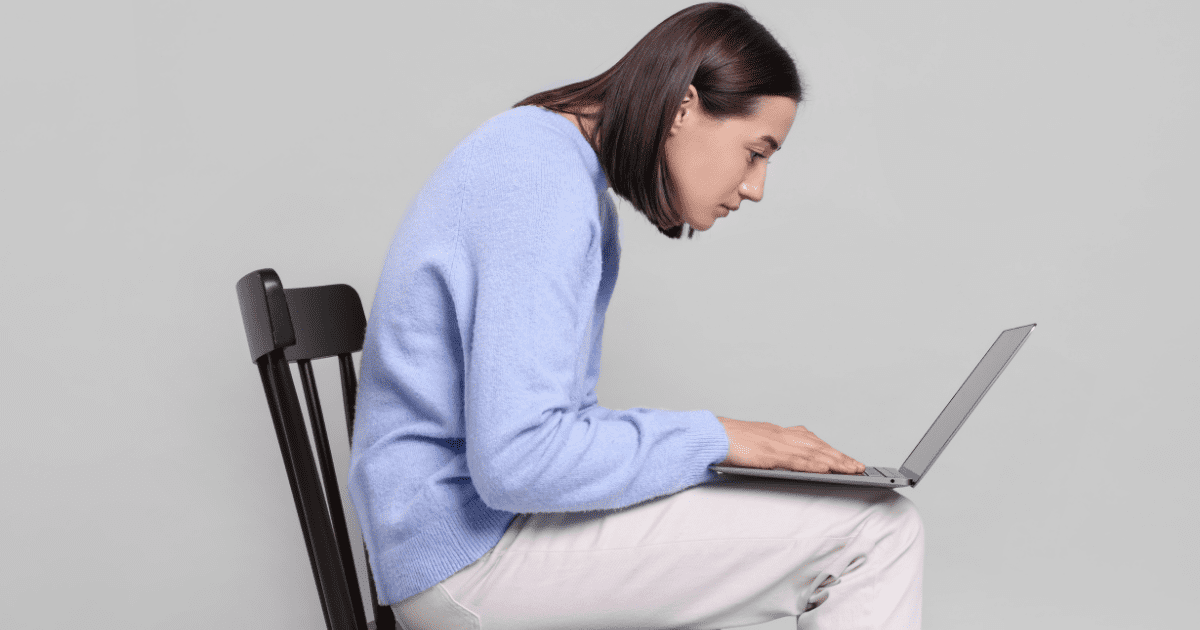
The Spine in Motion
Think of a dancer’s spine in motion.
It bends, twists, lengthens, and shortens as it responds fluidly to each moment of the dance.
Dancers’ bodies move in incredible ways but even in everyday life your spine does something remarkable.
Going from lying to sitting and then sitting to standing, your spine has to change its shape.
Think of bending down to load the dishwasher or reaching for the plate on the highest shelf. Your spine has to change its shape so that either you can bend down or reach up.
What about turning back as you reverse, or reaching towards the backseat to pick up something?
Captive of a chair-dominated world
Your spine orients you in the world, helping you look, reach, walk, and turn. Through constant, subtle coordination, it allows you to move from one place to another with ease.
And then, for most of the day, we take this extraordinary structure and put it on a chair.
We make it a captive of a chair-dominated world.
Chair-sitting (even on ergonomically designed ones) does few favors to the spine.
It distorts its natural curves, limits movement and increases pressure on the discs between the vertebrae.
What was designed for movement is asked to remain still, often in the same shape for hours.
Over time, the spine adapts to this lack of movement.
The joints between our vertebrae are synovial joints, they require regular movement in order to stay lubricated and nourished with nutrient-rich fluids.
But with lack of movement the discs receive less and less nourishment.
Some back muscles grip to hold us up, while others gradually lose their responsiveness.
Standing up begins to feel stiff.
Turning feels cautious.
Movement, once effortless, starts to require preparation.
Rethinking Sitting
In December, I attended a course in Ahmedabad, India. It brought together neuroscientists, professors, architects, and designers from around the world who are focused on putting the human body and experience at the center of the design process.
During the course, one of the presentations was by Jay Jagad.
He’s inspired by the work of Prof. Galen Cranz who has written and spoken extensively about the negative impact of chairs on our bodies and our health.
Galen and Jay, they ask us to rethink how we sit and how we design our living and workspaces.
And the first step towards that is noticing ourselves while sitting. To see what we actually do vs. what we think we are doing:
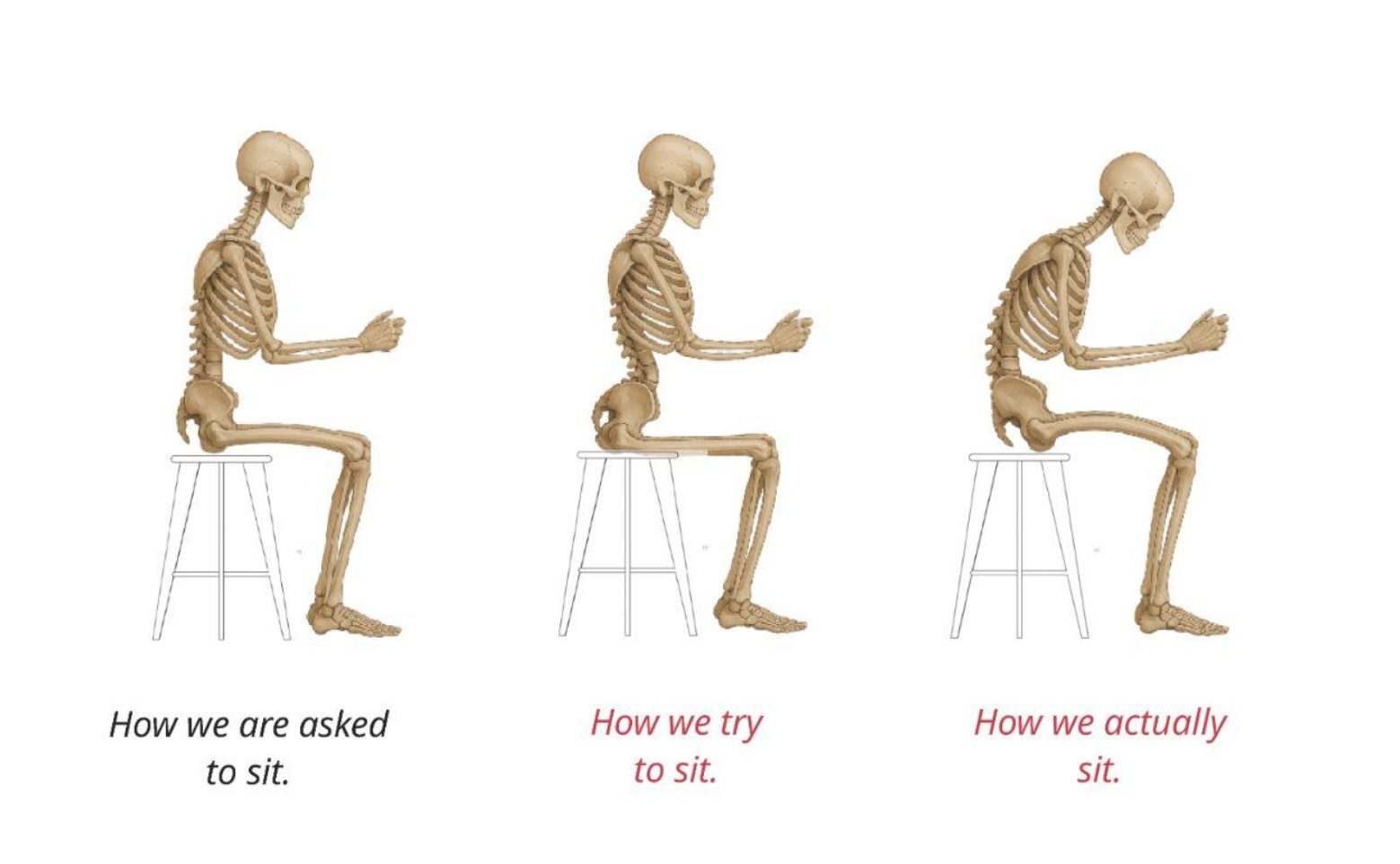
© Jay Jagad (https://www.karyashalla.com/)
What often gets labeled as “poor posture” is less about sitting incorrectly and more about sitting too long in one way.
What helps (one small place to start)
Rather than trying to hold yourself upright, let’s look at one small change.
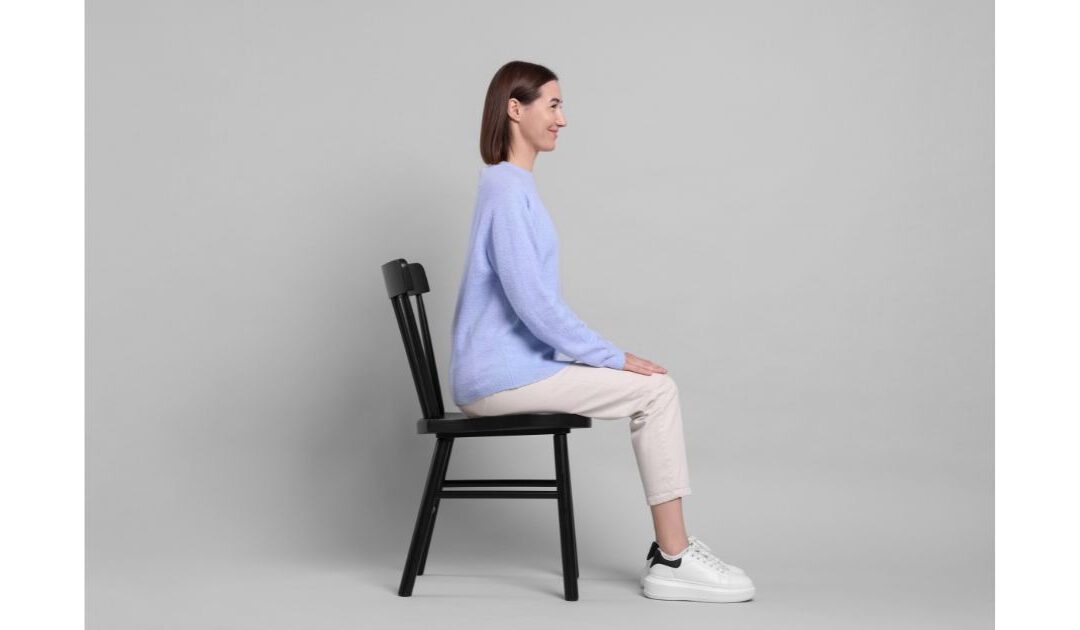
Every now and then, sit forward in your chair, away from the backrest, so that your spine comes to a more neutral position, see below —
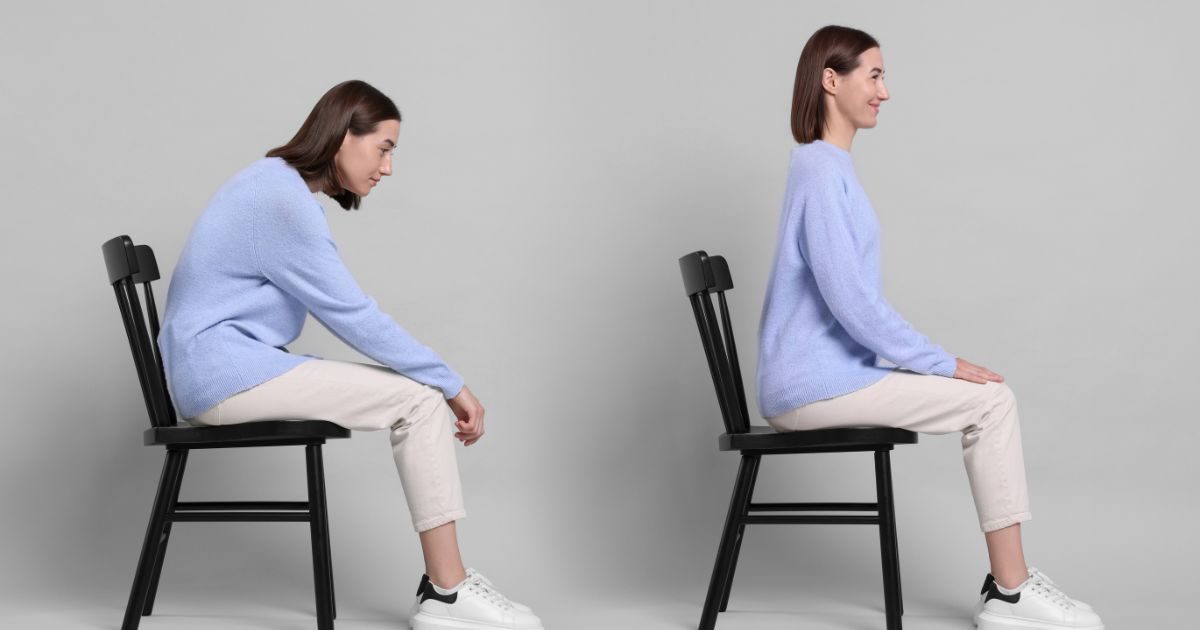
And you’ll get added benefits if you can sit on a firm surface like the chair in the photo.
You don’t have to give up on your soft chairs but from time to time do try and sit on a firm surface.
In the coming weeks, I’ll share more simple ways to explore sitting—and moving—so the spine can rediscover its natural adaptability.
The focus won’t be on correction, but on noticing, sensing, and learning new options.
You May Also Like...

Why “Just Relax” Fails
Let’s face it, life is full of stress. And our response to it is tied to our survival mechanism. Imagine a time when our ancestors lived on the...
The Ultimate Chair?
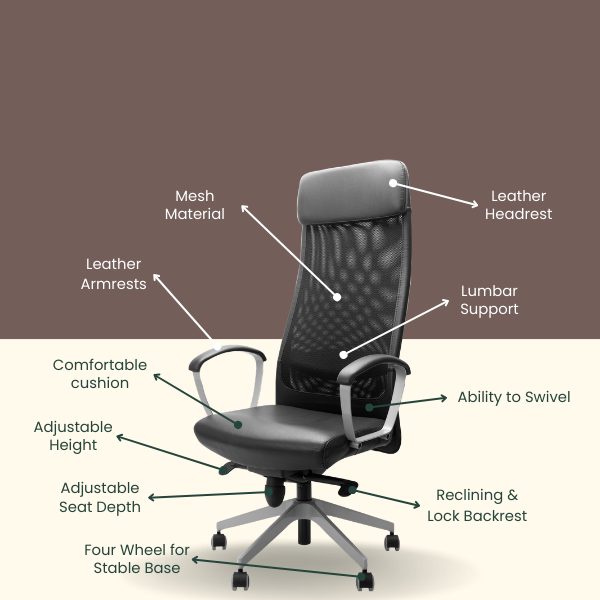
I’m often asked which chair I recommend for sitting, which one is best for maintaining good posture. The honest answer is that no chair is designed...
How To Sit Without Strain
In my last blog post, I wrote about the toll prolonged sitting takes on the spine. I suggested one simple change: every now and then, move toward...