
Is There Really No “Right” Way To Move?

In a recent email, I wrote:
“There is no one right way to move—only your way, explored with awareness.”
One thoughtful reader replied:
“If that’s true, does that mean slumping forward with my head down and rounded shoulders is perfectly fine—because it’s ‘my way’? Isn’t that the opposite of what the Feldenkrais Method teaches?”
It’s a great question and one that gets to the heart of what makes this method so different.
What It Really Means
When I say “there’s no one right way,” I don’t mean “every way is equally good.”
What I do mean is: there’s no one-size-fits-all answer.
Your body, your history, your habits, and your needs are unique. And so are the ways of moving that best serve you.
Take something as simple as sitting upright:
-
For someone who tends to collapse, sitting tall might feel empowering.
-
But for someone who’s constantly holding themselves rigid, it might just add more tension.
Posture vs. Possibility
Sitting slumped at your desk for hours? It may be common but that doesn’t make it optimal.
It can easily lead to fatigue, strain, or discomfort.
But instead of labeling it “bad posture,” the Feldenkrais approach would ask:
- What are the conditions under which this posture emerges?
- What options do you have?
- Can you sense the difference between this and another way of sitting—and shift freely between them?
Pain and stiffness usually arise when we lose the ability to choose how we move or hold ourselves.
It’s not the slouched position itself that’s the problem—it’s being stuck in it.
The Feldenkrais Method helps you:
-
Understand how you got there.
-
Discover what that posture is doing for you (there’s always a reason).
-
And gradually find something that feels easier, more supportive and natural.
We don’t impose a “correct” posture from the outside—we help you uncover what truly works from the inside.
So, Is There a “Right” Way?
It depends.
There’s no single, universal “right” way to sit, stand, breathe, or walk.
There is your way—the one that works for you right now.
And that can evolve. What feels great today may not work tomorrow. What suits your body might not suit someone else’s.
Instead of chasing a perfect form, Feldenkrais lessons help you develop options—ways of moving that match your changing goals, environment, and energy levels.
It’s about growing your awareness so you can make choices that feel easier, more efficient, adaptable, and comfortable.
A Musical Analogy
Imagine someone learning to play the violin.
If they play a note slightly off-key, we don’t say, “That’s just their way.”
But we also don’t tell them to grit their teeth and repeat the same 100 times.
Instead, we help them listen differently.
We guide them to refine their touch and sensitivity so they can hear what sounds better—and adjust with ease.
That’s what Feldenkrais practice is like.
We’re not drilling the “right” movement. We’re tuning your ability to sense what feels light, coordinated, grounded, and alive.
We’re building adaptability, not chasing perfection.
The Real Question
Instead of asking:
“Is this the right way to move?”
Ask:
“Does this serve me right now? Can I do it with ease? Do I have other options if I need them?”
Because the opposite of “wrong” isn’t “perfect”—it’s choice.
Choice comes from Awareness.
And ease comes from Self-experimentation.
The more aware you are, the more options you discover.
The more you experiment, the more likely you are to find something that truly fits.
And that’s when change becomes possible.
Not because you forced yourself into something better, but because you found what actually works for you.
You May Also Like...
The Body Has A Mind of Its Own – A Book Review
And What It Teaches Us About OurselvesThat map shifts when you learn a new skill, when you adapt to an injury, and even when you pick up a tool and...
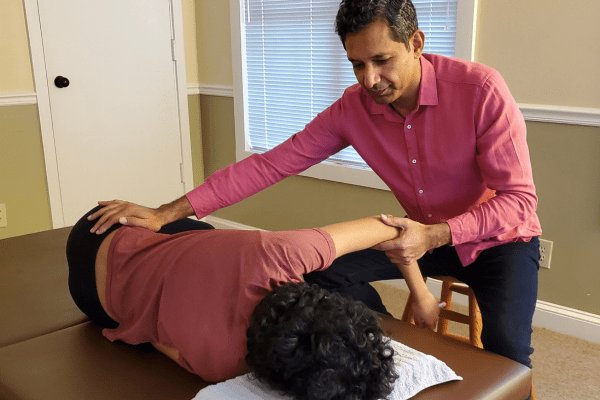
What is a 1-On-1 Feldenkrais Session Like?
In my last post, I walked you through what happens in an Awareness Through Movement (ATM) group class. Today, let’s explore the other side of the...
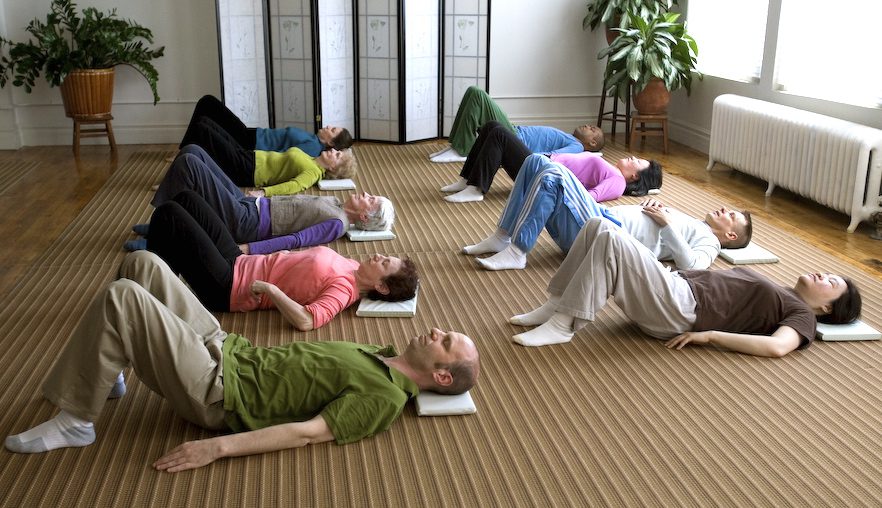
What Happens in a Group Class?
Now that you know a bit about what the Feldenkrais Method is, you might be wondering: “What actually happens in a session?” Let's dive into it...