What Happens in a Group Class?
Now that you know a bit about what the Feldenkrais Method is, you might be wondering: “What actually happens in a session?”
Let’s dive into it because the experience is often very different from what people expect.
People often arrive thinking it’s a gentle stretching class.
But they leave saying things like,
“I didn’t know I could move like that.”
Or
“I can walk without limping for the first time in weeks.”
Let me walk you through what actually happens—and why it works.
Two Modalities, One Goal: There are two primary ways to experience the Feldenkrais Method®.
Both aim to help you move with more ease—but in different ways.
1) Awareness Through Movement® (ATM)
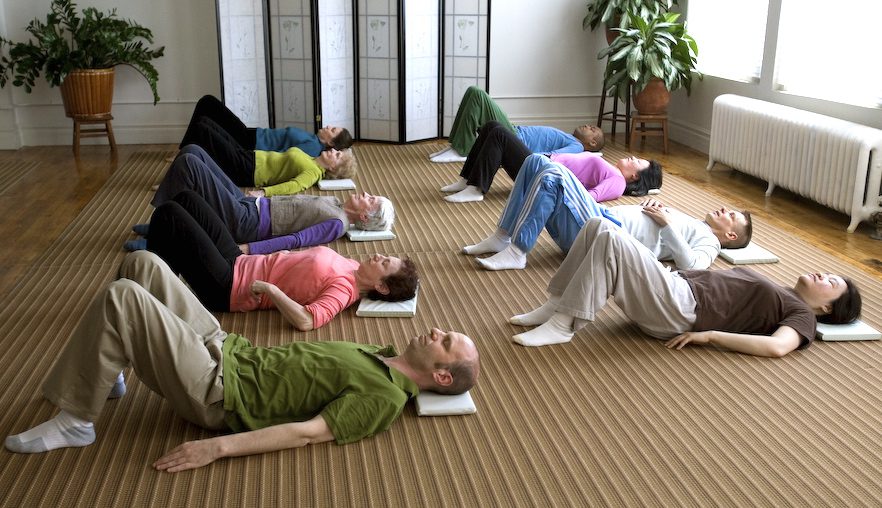
These are verbally guided group lessons.
You usually lie down on a mat, sometimes sit or stand, and follow a sequence of gentle, structured movements.
The teacher gives verbal cues only, without demonstrating, so the learning stays internal and personal.
Instead of copying someone else’s movements, you tune in to your own sensations and discover what feels effortless, balanced, and natural for you.
You explore different variations while paying attention to how easy or difficult each option feels.
The idea is to give your nervous system different options to choose from.
2) Functional Integration® (FI)
This is a one-on-one, hands-on session tailored to your needs.
The practitioner uses gentle, non-invasive touch to guide your body through movement.
It’s fully clothed, collaborative, and often deeply relaxing—like a conversation through movement.
The practitioner listens with their hands, sensing where you’re holding tension or moving inefficiently, and offers your system new options.
This Post Focuses on ATM or Group Lessons
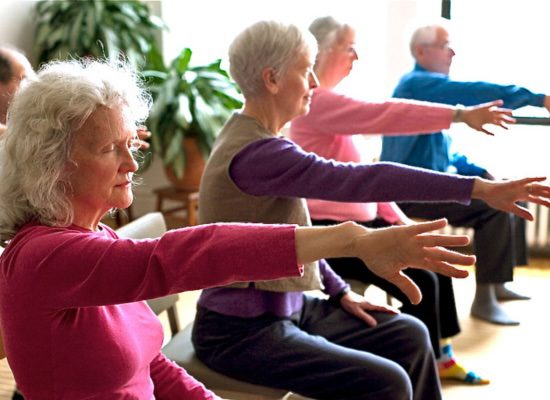
An ATM lesson usually happens in a small group.
You’re guided through a movement sequence—often lying down, sometimes seated or standing.
The sequence in each lesson is organized around a specific function such as turning or bending with different variations of the same movements.
The movements are slow, gentle, and non-strenuous.
It’s learning through attention, not repetition.
There’s no stretching, no goals to hit, and no pushing through pain.
Instead, you’re invited to notice:
- What do you do?
- How do you do it?
- What changes when you try it another way?
For example, what does your lower spine do when you lift your head?
Can you breathe more easily when you soften your jaw?
Here’s the part that surprises people most: giving your nervous system several options to choose from, rather than one “correct” way to move, is exactly why this works. There’s a reason for that, and it turns out neuroscience has been circling the same idea from a completely different direction — computational models of the brain now suggest movement isn’t separate from how the brain builds any of its models at all, including its model of you. (See my reading list on this. If you enjoy reading about how our brain works, this list is for you.)
There are frequent rests during the lesson. By the end of the lesson, a once difficult movement may become a lot easier.
Why It Works
These lessons create new sensory experiences your nervous system can learn from.
That’s why the movements are sometimes unusual or unfamiliar—they help you uncover habits you didn’t know you had.
You might discover:
- You’ve been holding your breath without realizing it
- A tiny movement feels impossible—but gets easier with awareness
- You can do less and actually move better
One student told me:
“I didn’t even realize I was bracing my neck every time I stood up—now it feels effortless.”
That’s the power of awareness.
Your brain keeps a kind of working map of your own body: where your joints are, how much effort a movement should take, what’s “normal” for you — and that map isn’t fixed. It updates with new experience, the same way it did when you first learned to ride a bike or write your name. An ATM lesson is really just a deliberate way of feeding your nervous system new information so that map can update, sometimes in a single class.
How to Keep the Learning With You
It’s true. Sometimes the ease you feel in class seems to fade.
But that doesn’t mean it’s gone.
It means your old patterns are familiar.
They resurface—not because the new way didn’t work, but because it’s still new.
Here’s how to keep the learning alive:
- Revisit a lesson you liked through an audio recording.
- Choose one thing in your daily life—like how you sit, or breathe, or reach.
- Ask: “Is there a softer, easier way to do this?”
- Stay curious. Confusion isn’t failure, it is often the beginning of something new.
There’s real science behind why repetition alone doesn’t do this, but paying attention does. Neuroscientist Stanislas Dehaene, whose research I wrote about here, found that real learning depends on attention, active engagement, noticing your own errors, and rest — not just doing something over and over. That’s almost exactly the recipe above. Each time you return your attention to something small, your nervous system strengthens that connection. The new way becomes more available, not because you forced it, but because your system recognizes it as useful. The old habit becomes less relevant, on its own, over time.
Real Benefits!
Here is what Julie, one of my long-term ATM students, had to say:
“After 17 years doing nearly weekly Feldenkrais classes, the movements have become natural for me.
That is not to say they are always, year in year out, exactly the same, but my body has aged to 78 years more gracefully than one could imagine.
I move slower and more intentionally than my peers, but I don’t let that affect how I move. Try it, stay with it, and you will be fabulous!”
Thank you, Julie. You are indeed fabulous!
Coming up next…
In my next post, I’ll take you inside a 1-on-1, hands-on Functional Integration (FI) session. What it looks like, how it feels, and why so many people (of all ages) find it life changing.
Stay tuned!
Keen to try a group class?
Check out our ATM Group Classes below
It’s one of the gentlest and most surprising things you can do for yourself!
You May Also Like...
The Body Has A Mind of Its Own – A Book Review
And What It Teaches Us About OurselvesThat map shifts when you learn a new skill, when you adapt to an injury, and even when you pick up a tool and...
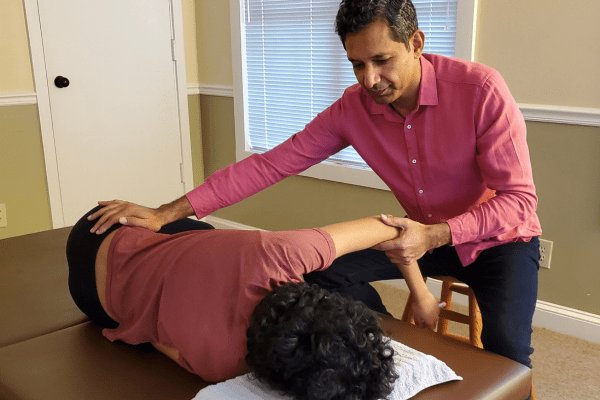
What is a 1-On-1 Feldenkrais Session Like?
In my last post, I walked you through what happens in an Awareness Through Movement (ATM) group class. Today, let’s explore the other side of the...
Is The Feldenkrais Method Practical?
It’s a fair question because Feldenkrais doesn’t look like your typical exercise class. The movements are small. There’s no sweating, no reps, no...
Copyright @ Atlanta Feldenkrais. The following are service marks or certification marks of the Feldenkrais Guild of North America: Feldenkrais®, Feldenkrais Method®, Functional Integration®, Awareness Through Movement®, ATM®, FI®, Guild Certified Feldenkrais Teacher®, and Guild Certified Feldenkrais PractitionerCM.