
If You Had To Choose One Exercise
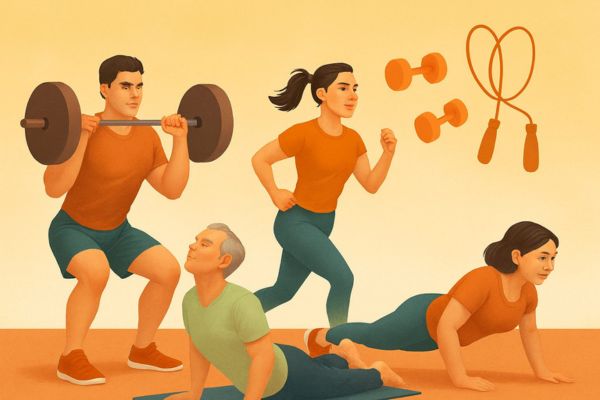
One Exercise For the Rest Of Your Life
Walking
For me, without a doubt, it would be walking.
Yes, walking. Simple, everyday, unglamorous walking. And yet, it is perhaps the most profound, essential, and life-giving movement we do.
Walking is life in motion.
It is how we explore the world, stay independent, and maintain vitality throughout our lives.
It embodies motility, the capacity for self-generated movement, which is essential for health and well-being. From keeping our hearts strong to maintaining balance and coordination, walking touches nearly every system in the body.
Beyond the physical, it feeds the mind, supports creativity, and strengthens emotional resilience.
Why Walking Is More Complex Than It Looks
Walking may appear simple, but it is deceptively complex.
Babies spend nearly a year learning how to walk.
That seemingly effortless stride is the result of thousands of neural connections and carefully coordinated muscle movements.
Every step requires your brain to integrate balance, joint alignment, muscle activation, and sensory feedback—automatically and continuously.
Even as adults with decades of practice, walking is not a static skill.
Over time, habits, small injuries, or subtle inefficiencies can creep in, leaving us stiff or imbalanced.
The encouraging news is that walking can be refined at any age, helping us rediscover ease and increase the pleasure in each stride.
Fascinating Facts About Walking
-
The human foot is extraordinary. Each foot contains 26 bones, 33 joints, and over 100 muscles, tendons, and ligaments. Coordinating all of that in every step is a feat your brain performs thousands of times a day.
-
Walking improves brain function. Regular walking enhances memory, supports neural plasticity, and reduces stress and anxiety. It is not just exercise, it is a tonic for the brain.
-
Walking sparks creativity. Great thinkers from Aristotle to Charles Dickens used walking to fuel ideas and imagination.
-
We are built to move. Humans are natural endurance walkers, designed for long distances. Our joints, muscles, and even sweat glands evolved to support efficient movement for hours at a time.
The Simple Pleasure of Walking
Beyond science, walking is an act of presence.
Feeling the ground beneath your feet, sensing the rhythm of your body, taking in the sights, sounds, and smells around you—walking reconnects us with ourselves.
It is a chance to slow down, experience freedom, and cultivate joy.
Walking as a Skill
Because walking is both fundamental and fascinating, I am excited to explore it more deeply in an upcoming Group series.
We will look at walking not only as an activity but also as a skill.
Through Feldenkrais lessons, you will discover how your skeleton, joints, and nervous system work together to make each step smoother and lighter.
Even small adjustments can reshape how you move, improve posture, and increase the ease you feel every time you walk.
What You Can Try Now
Pay attention to your stride, the swing of your arms, the way your feet meet the ground. Walk with curiosity and awareness, and see what discoveries emerge.
Even small moments of attention can reshape how your body and brain work together.
You May Also Like...

Are Your Shoes Silencing Your Feet?
Hey, it’s me—your left foot. Yes, I’m talking to you. We need to have a serious conversation. For years, I’ve been stuffed into a sock (basically a...
10 Years in Barefoot Shoes
Back in 2012, I picked up Born to Run by Christopher McDougall, not realizing it would change the way I thought about shoes—and my own feet—forever....
Small Changes, Big Results
We started this journey with a simple yet important question: Why are shoulder issues so common? After my own shoulder injury in 2009—and a deep...